The outbreak of COVID-19 means the economy has slipped into the worst recession for a couple of generations, and many businesses are struggling seven months later as a result of the coronavirus outbreak. With job security rare and money sparse, it’s no wonder that charities are seeing fewer donations.
It is expected that COVID-19 will cause a loss of over £12.4bn (IoF/CFG June 2020) to the charity sector across the UK. In addition to reduced donations, more than 25,000 jobs within charities have been lost, and this number is expected to exceed 60,000.
The decrease in donations is not just a result of the tighter purses for donors, but many charities depend on shop sales or from fundraising events. For example, the London Marathon raised £66m for charities in 2019, but the 2020 event was limited to elite athletes only, meaning the usual fundraising activities of approximately 40,000 participants were massively reduced.
Although it may be quite some time before charities can return to their former fundraising levels, the good news is that there are ways to optimise short term income to help keep funds afloat. A significant part of the solution lies with charities providing different methods of donating, such as by using digital and contactless donation solutions; these can be done with ease, safety, and in line with government recommendations. Such solutions are a big reason why more charities are advancing their Digital Transformation plans as fast as their currently limited resources will allow.
Contactless Payments and COVID-19
As a result of the COVID-19 outbreak, many businesses have looked to take more contactless payments in order to reduce the potential cross-contamination risk that comes from taking cash. The side effect of this is that fewer people are using cash and it’s therefore becoming the norm for people not to have any loose change on them. The shift to a cashless society was well underway pre COVID-19, but it’s accelerated significantly since Spring 2020.
Rather than lose cash donations completely, charities will have to change the way they collect donations, appeal to existing donors in new ways, and reach potential new donors by engaging with them via their preferred transaction methods, such as Apple Pay and Google Pay.
Contactless donations enable donors to safely donate without the need for loose change. As well as decreasing the risk of spreading the virus, this can help to boost a charity’s donations – did you know that donors will almost always donate a larger amount via their card than they would have done by giving cash?
As the demand for contactless payments grows, there’s a wide range of manufacturers offering fixed or portable, rechargeable machines. These can be purchased outright or rented, allowing charities to collect donations wherever their collectors are. While most work via WiFi, there are models which can even accept donations offline and then process the donation when a signal is received.
Text2Donate
Another way to optimise short term income is to promote a Text2Donate service. By targeting potential donors with a method that’s both easy and accessible for them, charities will see a boost in donations.
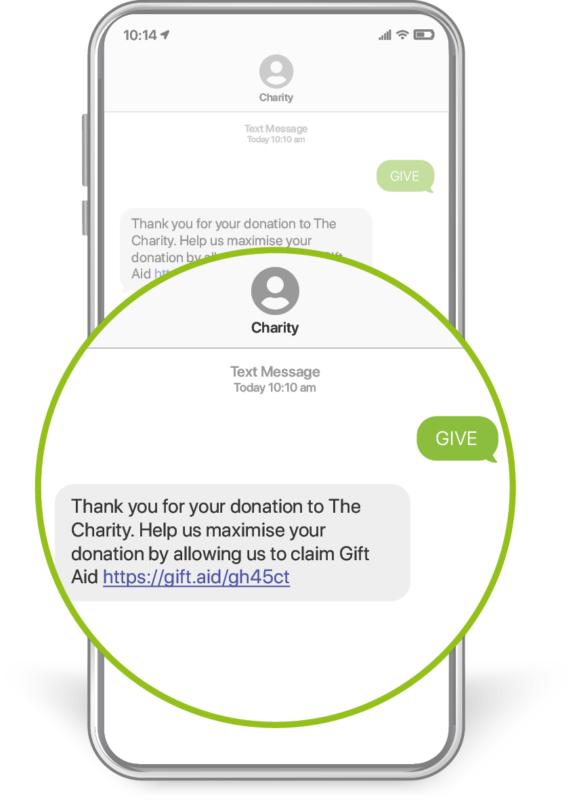
Text donations aren’t only easy for potential donors to use, they can also be set up with minimal or even zero cost. This makes a Text2Donate campaign an ideal starting point for charities that are either trying to get back on their feet with limited funds behind them, or that are looking for alternative donation solutions that aren’t reliant upon face to face collections.
Unlike other methods of fundraising, charities will receive 100% of the money donated via a text message, with the donor paying a modest transaction charge to their provider, set off by the donation.
QR2Donate and COVID-19
While Text2Donate payments can make a useful addition to any charity’s fundraising efforts, there is another method which also makes use of the mobile devices many potential donors carry with them at all times!
QR Codes are unique pixelated images that can be scanned using a smartphone’s camera, prompting the phone to open a web page or app that offers more information about a charity and its donation options. QR codes have grown in popularity recently, being widely used for location tracking and ordering from bars and restaurants.
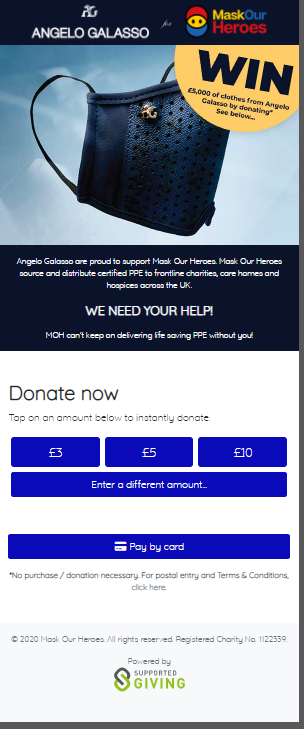
A QR Code can be put on physical promotional materials such as posters and even in shop windows, but they can also be used across digital platforms. These codes give donors complete freedom to donate as much as they want, when and where they want using their bank card or a payment method set up on their phone, such as Apple Pay, Google Pay and PayPal.
A unique code can be generated for each different collector or collection location, making it easy to track success rates without the cost or inconvenience of purchasing multiple buckets, devices, etc. What’s more, charities gain more information about their donors for marketing purposes, in a GDPR compliant way, and increases the likelihood of the donors setting up a regular donation. In the world of COVID-19, this is a revolution.
Gift Aid
Of course, while it’s important to boost the number of donations a charity is receiving, it’s also vital that a charity makes the most of the money donated.
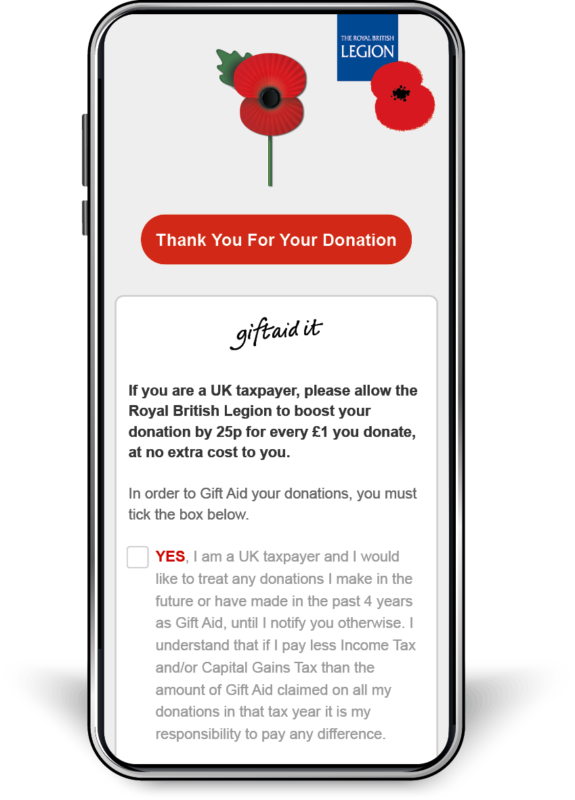
Collecting Gift Aid with donations is a great method of increasing the value of each donation – for a standard rate tax payer, if you donate £10 and check the Gift Aid box, this is worth another £2.50 to the charity. However, many charities have difficulty keeping on top of Gift Aid collections and so large sums of ‘unclaimed Gift Aid’ goes begging each year.
HMRC estimate that they are holding around £540 million per annum in unclaimed Gift Aid. At Supported Giving we help charities claim the money they are entitled to through Gift Aid, going back through up to four years of donations.
Our expert team will work with each charity to identify and contact previous donors based on their past donations and preferences, and then re-contact these donors in a GDPR compliant manner to retrospectively seek approval to claim Gift Aid on past donations. This allows us to configure customised engagement workflows, targeting specific donors using the appropriate channels to ensure the best recovery from the original donation.
To find out more about cashless donation solutions during COVID-19 or Gift Aid Recovery, please call 0203 011 1313 or get in touch with the team.